Thursday, March 05, 2009

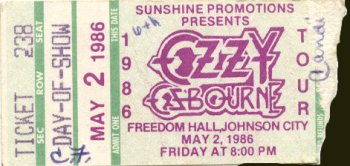
Freedom Hall's Golden Age of Rock : The Seventies (Note this is Freedom Hall in Johnson City, Tennessee NOT Louisville, Ky.!!)


When it opened in the summer of 1974 Johnson City's Freedom Hall rocked.

Okay, the first act didn’t rock: that was comedian Bob Hope who opened Freedom Hall on July 5, 1974. But he was certainly a big name act. And by fall 1974 the place was jumping from all the rock and rollers rumbling through: Alice Cooper, KISS, Lynyrd Skynyrd, ZZ Top, Doobie Brothers, Bob Seger, Linda Ronstadt, REO Speedwagon, Charlie Daniels Band, Marshall Tucker Band. And that was just the first year!

The seventies were probably the golden age of rock and roll tours. And when Freedom Hall opened we finally got our own arena in upper east Tennessee. We no longer had to drive to Knoxville or Asheville or Charlotte to see big name acts. They came here: Elvis! The Eagles! Bruce Springsteen! The Beach Boys! Tom Jones! Engelbert Humperdinck!

You should have been here.

David Miller and I, who attended many, many of those shows, have been scouring old issues of the Times News to come up with this list of all the big name acts that played at Freedom Hall in the seventies. By our count there were 183 big time acts who played Freedom Hall in that five year period! I can’t promise it’s complete but it’s close. I have included ticket prices where we could find them.

(This post is about Freedom Hall in Johnson City, Tennessee not Freedom Hall in Louisville, Ky.)

Freedom Hall opened on July 5, 1974
July 5, 1974 - Bob Hope w/Karen Stanton and the Bowers Family - $10, $8, $6
Aug. 10, 1974 - Frankie Vali and the Four Seasons - $6, $5, $4
Sept. 28, 1974 – Earl Scruggs Review
Oct. 4, 1974 – Mac Davis - $6.50, $5.50, $4.50
Oct. 18, 1974 – J. Geils Band w/REO Speedwagon - $5
Nov. 8, 1974 – Mountain w/Atlanta Rhythm Section - $5
Nov. 26, 1974 – Black Oak Arkansas w/Foghat and The Stampeders - $6
Dec. 7, 1974 – Doobie Brothers
Jan. 4, 1975 – Bachman-Turner Overdrive w/Bob Seger
Feb. 17, 1975 – Joe Walsh w/Charlie Daniels Band - $5
March 8, 1975 – Marshall Tucker Band w/REO Speedwagon
March 11, 1975 – Guy Lombardo - $6, $5, $4
March 22, 1975 – Lynnrd Skynnrd w/Sensational Alex Harvey Band - $5
March 28, 1975 – Johnny Winter w/James Cotton Blues Band - $5
April 19, 1975 – ZZ Top w/Status Quo - $6
April 21, 1975 – Tommy Dorsey Orchestra
April 24, 1975 – KISS (3,000 attendance) w/Rush and Heavy Metal Kids
May 2, 1975 – Porter Waggoner w/Barbara Lea and Speck Rhodes - $5
May 10, 1975 – America w/Captain - $6
May 17, 1975 – Linda Ronstadt w/Al Stewart - $6
May 27, 1975 – Alice Cooper w/Suzi Quatro - $6
May 31, 1975 – John Prine
June 25, 1975 – Peter Frampton w/Montrose - $5
June 27, 1975 – Sonny Payne Trio - $4
July 4, 1975 – Merle Haggard w/Ronnie Reno and Leona Williams - $6, $5
July 15, 1975 – Electric Light Orchestra w/Slade and Pavlov’s Dog - $5
Aug. 4, 1975 – Eagles w/Poco
Aug. 21, 1975 – Jethro Tull w/Sensational Alex Harvey Band - $7
Aug. 30, 1975 – Uriah Heep w/Blue Oyster Cult
Sept. 19, 1975 – Marshall Tucker Band w/Wet Willie and Heartsfield - $5.50
Oct. 1, 1975 – Aerosmith w/Ted Nugent - $6.50
Oct. 10, 1975 – Four Seasons
Oct. 15, 1975 – Rod Stewart w/Faces
Oct. 22, 1975 – Black Oak Arkansas w/Foghat and Montrose - $5.50
Nov. 5, 1975 – Edgar Winter Group w/Rick Derringer, J. Geils Band and Climax Blues Band - $5.50
Nov. 9, 1975 – Lettermen - $6.50, $5,50
Dec. 6, 1975 – Black Sabbath w/Manfred Mann’s Earth Band and Ruby Starr & The Grey Ghost - $5.50
Dec. 27, 1975 – Charlie Daniels Band w/Atlanta Rhythm Section and Grinderswitch - $6.50
Jan. 10, 1976 – REO Speedwagon w/Bob Seger and Styx - $5.50
Jan. 29, 1976 – Vienna Boys’ Choir - $5
Jan. 31, 1975 – Deep Purple w/Ted Nugent and Nazareth - $5.50
Feb. 13, 1976 – Van Cliburn - $5
Feb. 28, 1976 – Bachman-Turner Overdrive w/REO Speedwagon and Trooper - $6.50
March 13, 1975 – Joe Cocker w/Ozark Mountain Daredevils and Point Blank - $6.50
March 18, 19 and 20, 1976 – Elvis - $12.50, $10 (sold out all 22,000 seats for the three shows)
April 2, 1976 – Neil Sedaka - $6.50
April 20, 1976 – Bruce Springsteen - $5.50
May 14, 1976 – President Gerald Ford – 9 a.m. - free
May 14, 1976 – Santana w/Ted Nugent and Star Castle - $5.50
May 31 – Yes w/Pousette Dart Band
June 22, 1976 - Nazareth w/Elvin Bishop & Ian Gillan - $5.50
July 19, 1976 – KISS w/Bob Seger Silver Bullet Band - $6
Aug. 16, 1976 – Doobie Brothers w/Heart - $6
Sept. 2, 1976 – Robin Trower w/Angel - $7
Oct. 10, 1976 – Donald Byrd & the Blackbyrds w/Dorothy Moore and Chocolate Milk - $7, $6
Oct. 13, 1975 – Aerosmith and Ted Nugent w/Rush - $5.50
Oct. 19, 1976 – Frank Zappa and the Mothers - $6
Oct. 15, 1976 – John Denver (Democratic fundraiser) - $100, $25, $10
Oct. 29, 1976 – Blue Oyster Cult w/Mothers Finest and The Ramones - $6
Nov. 9, 1976 – Seals and Croft - $6
Nov. 21, 1976 – Leon Russell w/Thunderbyrd starring Roger McGuinn - $6
Dec. 4, 1976 – Jerry Lee Lewis w/Jeanne Pruett and Ronnie Dove - $6, $5
Dec. 10, 1976 – Kansas w/Sea Level and Starcastle - $6
Jan. 15, 1977 – Charlie Daniels Band w/Elvin Bishop and Cate Bros. - $6
Jan. 29, 1977 – Marshall Tucker Band w/Pure Prairie League - $6
Feb. 12, 1977 – Waylon Jennings - $7, $6
Feb. 18, 1977 – Boston w/Atlanta Rhythm Section - $6
Feb. 19, 1977 – Elvis Presley - $15, $12.50
Feb. 26, 1977 – KISS w/Dictators - $6.50
March 11, 1977 – Willie Nelson w/Jerry Jeff Walker and Steve Young - $6.50, $5.50
March 19, 1977 – Dolly Parton w/Parker McGee - $7, $6
April 2, 1977 – Bob Seger and the Silver Bullet Band w/Starz - $7, $6
April 15, 1977 – ZZ Top - $7
April 22, 1977 – Jerry Reed & George Jones - $6.75, $5.75
May 4, 1977 – Tom Jones - $9, $8
May 6, 1977 – Gregg Allman - $7, $6
May 19, 1977 – Foghat w/Styx and Head East - $6
May 30, 1977 – Ted Nugent w/Nazareth and Michael Stanley Band - $6
June 18, 1977 – Dan Fogelberg w/Fools Gold - $7, $6
June 27, 1977 – Emerson, Lake & Palmer - $8
July 4, 1977 – Frankie Valli and the Four Seasons Farewell Tour - $7, $6
July 6, 1977 – REO Speedwagon w/Black Oak Arkansas and Judas Priest - $6
July 20, 1977 – Captain & Tenille w/Kip Addotta - $7.50, $6.50 – Cancelled
Aug. 19, 1977 – Bad Company w/Climax Blues Band - $6
Aug. 23, 1977 – Willie Nelson w/Emmylou Harris - $7, $6
Sept. 23, 1977 – Jimmy Buffet w/Jesse Winchester - $7, $6
Oct. 4, 1977 – Tom Jones - $9, $8
Oct. 8, 1977 – Heart w/Sanford Townsend Band - $6
Oct. 13, 1977 – Ferrante & Teicher - $7.50, $6.50
Oct. 21, 1977 – Kenny Rogers w/Stella Parton and T.G. Sheppard - $7, $6
Oct. 29, 1977 – Robin Trower w/Ram Jam and Crawler - $6
Nov. 11, 1977 – Beach Boys - $7
Nov. 12, 1977 – Tom T. Hall w/Jean Shepard and Jerry Clower - $7
Nov. 19, 1977 – England Dan and John Ford Coley - $7, $6
Nov. 24, 1977 – AC/DC w The Motors and UFO
Dec. 3, 1977 – Edgar Winter’s White Trash w/Charlie Daniel’s Band and Wet Willie
Dec. 8, 1977 – Ronnie McDowell - $5
Dec. 10, 1977 – Styx w/April Wine - $7
Jan. 27, 1978 – Bob Barker’s Fun and Games - $6
Feb. 4, 1978 – Charlie Pride w/Dave and Sugar - $7, $6, $5
Feb. 22, 1978 – Engelbert Humperdinck - $10, $9
March 10, 1978 – Emerson, Lake & Palmer - $7
March 11, 1978 – Waylon Jennings w/Jessi Colter - $7, $6
March 15, 1978 – The Lettermen - $7.50. $6.50
March 17, 1978 – Rush w/The Babys and Pat Travers - $6
March 18, 1978 – Conway Twitty and Loretta Lynn - $6.50, $5.50
April 1, 1978 – J.D. Sumner - $6, $5
April 7, 1978 – Blue Oyster Cult w/Angel and Godz - $7
April 14, 1978 – Willie Nelson w/Emmylou Harris - $8, $7
April 20, 1978 – Ronnie Milsap w/Eddie Rabbit - $7.50, $6.50
April 29, 1978 – Journey w/Montrose – $6
May 19, 1978 – Larry Gatlin - $7
June 3, 1978 – Foreigner w/Head East - $7
June 23, 1978 – REO Speedwagon w/Ritchie Blackmore’s Rainbow, Ronnie James Dio, Cozy Powell, Nantucket - $7
July 4, 1978 – B.J. Thomas - $7.50, $6.50
July 7, 1978 – Johnny Paycheck w/R.C. Cannon - $6, $5
July 12, 1978 – Kansas w/Dudek Finnegan Krueger Band - $7
August 18, 1978 – Seals & Croft w/Eddie Money - $7.50, $6.50
Sept. 1, 1978 – Doobie Brothers w/Wet Willie - $7
Sept. 9, 1978 – AC/DC w/Cheap Trick and The Dictators - $5
Oct. 13, 1978 – Harlem Globetrotters - $6, $5
Oct. 14, 1978 – Outlaws w/Pat Travers - $7
Oct. 21, 1978 – Ferrante & Teicher - $8, $7
November 2, 1978 – Kenny Rogers w/Eddie Rabbit and Dottie West - $7.50, $6.50
Oct. 28, 1978 – Bob Seger Silver Bullet Band
Nov. 3, 1978 – Charlie Daniels Band - $6
Nov. 9, 1978 – Chicago - $8.50
Dec. 2, 1978 – Statler Brothers w/Barbara Mandrell - $7.50, $6.50, $5.50
Dec. 26, 1978 – Atlanta Rhythm Section w/Ambrosia $6
Jan. 6, 1979 – Styx w/Cindy Bullens - $7
Jan. 24-25, 1979 – Red Skelton - $12, $10
Jan. 27, 1979 – Boston w/Sammy Hagar - $7
Feb. 2, 1979 – Heart w/Firefall - $7
Feb. 10, 1979 – Merle Haggard w/Marty Robbins - $8, $7
March 3, 1979 – Sha Na Na - $7.50, $6.50
March 16, 1979 – Waylon Jennings w/Buddy Holly’s Original Crickets - $8, $7
March 17, 1979 - Rush w/Angel - $7
March 23, 1979 – Charlie Pride - $7.50, $6.50
April 5, 1979 – Don Williams w/Charlie McCoy and Barefoot Jerry $7.50, $6.50
April 7, 1979 – Eddie Rabbit w/Gail Davies - $7.50
April 14, 1979 – Black Oak Arkansas w/Stillwater and Brownsville Station - $6.50
April 17, 1979 – Eric Clapton w/Muddy Waters - $7.50
April 27, 1979 – Cheap Trick w/TKO - $6.50
May 5, 1979 – Tom Jones w/Freddie Roman $12, $10
May 11, 1979 – Mahogany Rush w/Blackfoot and April Wine - $7
May 12, 1979 – Willie Nelson w/Leon Russell - $8, $6
May 19, 1979 – Oak Ridge Boys w/Emmylou Harris - $8, $7
June 5, 1979 – Lawrence Welk - $8.50, $7.50
June 16, 1979 – Nazareth w/Mahogany Rush - $7
July 7, 1979 – England Dan & John Ford Coley w/Counterphase - $8, $7, $6
July 27, 1979 – Molly Hatchet
Aug. 24, 1979 – Blackfoot w/Nantucket - $4
Sept. 14, 1979 – Moe Bandy w/Joe Stampley - $6, $5
Sept. 22, 1979 – Little River Band
Sept. 28, 1979 – AC/DC w/Sammy Hagar and Mothers Finest
Oct. 6, 1979 – Johnny Paycheck w/Bellamy Brothers
Oct. 20, 1979 – Blue Oyster Cult w/Rainbow - $7 plus 50 cents parking
Oct. 26, 1979 – Peter Frampton w/Pat Travers and Mothers Finest $8 plus parking
Nov. 3, 1979 – Larry Gatlin - $7, $6
Nov. 17, 1979 – Conway Twitty w/Ronnie McDowell - $8, $7
Nov. 23, 1979 – Harlem Globetrotters - $6, $5
Nov. 24, 1979 – REO w/Ronnie Montrose - $7
Nov. 30, 1979 – Statler Brothers w/Barbara Mandrell - $8, $7
Dec. 8, 1979 – Foreigner w/Wet Willie and Nantucket - $8
Dec. 14, 1979 – ZZ Top w/Point Blank - $8
Freedom Hall kicked off the eighties with teen idol Rex Smith (“You Take My Breath Away”) on Jan. 11, 1980. Tickets were $8 and $7.

Rock and roll didn’t suddenly cease coming to Freedom Hall with the advent of the eighties. Alice Cooper, AC/DC, Van Halen and Frankie Valli and The Four Seasons all performed in 1980. But David and I had to draw the line somewhere. If you want a list of eighties acts, you’ll have to make your own. Count on spending four hours per year searching microfilm.

Monday, July 22, 2019

The Night Bruce Springsteen Played to 7,102 Empty Seats in Johnson City


A couple of weeks ago I posted a column about the Best Concert I Ever Saw: Bruce Springsteen in 1976 at Atlanta’s Fox Theater. That was when he was still a New Jersey punk and before he became The Voice of the Common Man.
I saw him a couple of weeks later at Johnson City’s Freedom Hall, a near-empty Freedom Hall. (The attendance reminded me of a Christmas tournament basketball game in Sprankle Gym against Blountville. Assistant Coach John Whited came in the dressing room as we were preparing to take the floor and said, “Boys, a couple of thousand people are going to miss this game.”)
I had always heard that Springsteen – who had just been on the covers of Time and Newsweek – vowed never to play Johnson City again. I knew it was a small crowd but I never knew how small until this weekend. WJHL-TV News ran a story about why Freedom Hall doesn’t get the shows it once did. Included as a web extra was a chart of all the rock shows since the Hall opened in 1974.
And there on the list is the Springsteen show I attended with Bruce Haney, Rosemary Haney and 895 other people (total attendance was only 898 – not even 900 people in an auditorium that held 8,000). No wonder I remembered mostly empty seats.
It’s a fun list to peruse: artists’ names, dates of shows and attendance.
Springsteen’s show was at the bottom in attendance.
Among the top-drawing shows were The Eagles, Deep Purple and Ted Nugent, Kiss, Elvis, AC/DC and Molly Hatchet.
Even Dan Fogelberg outdrew Springsteen.
You can check out the list here. 

https://www.wjhl.com/news/local/web-extra-list-of-freedom-hall-events-performances/


Friday, February 03, 2006


Live Music at Freedom Hall in Johnson City

Music, live music in particular, has been topic A among my friends this week. We've been talking about the good old days when Freedom Hall in Johnson City was a hot bed for live music shows.

I'm trying to assemble a list of the big acts that have played there over the years.

Any list starts with the three shows by Elvis in the spring of 1976.

Bruce Springsteen was there around the same time and played to a decidedly less than capacity house.

John Prine suffered the same fate in '75 or '76. I seem to recall he opened the show by opining, "Looks like a few thousand people are gonna miss this show."

Linda Ronstadt performed in the mid-seventies with Al Stewart as her opening act.

Help! Remember any other big Freedom Hall shows and their dates?

Monday, July 08, 2019

The Best Concert I Ever Attended -
What's Your Pick?

Jimmy Buffett in the mid-seventies

I was riding along with my son-in-law Ben Sharpe when Jimmy Buffett came on the radio.
“I saw him in concert in Johnson City back in the seventies,” I told him.
“Wow,” he said. “I’ve only been to three concerts in my life.”
He proceeded to name them.
I don’t think his generation was as into rock concerts as mine was.
I couldn’t begin to name all the concerts I’ve been to. It started with Al Hirt and Boots Randolph – not exactly “rock” - at the ETSU gym in 1965. And before that year was out, I had seen a half dozen concerts, including the Rolling Stones in Raleigh.
I’ve seen Elton John and Frank Sinatra, Ol’ Four Eyes and Ol’ Blue Eyes.
I saw Crosby, Stills, Nash and Young in Memphis and Elvis in Johnson City and Dayton, Ohio.
I could go on and on and on.
The best concert I’ve ever seen? I’ll tell you in a few paragraphs.
But about a year ago I got the idea to turn that idea – Best Concert – into a column and began polling my friends. My time as a columnist expired before I could finish my polling. But here’s what I got:
For Jo Zimmerman it was the Rolling Stones Nov. ’94 in Tampa.
David Miller couldn’t make a choice between two:  J. Geils Band and U-2 in 1981 at Alumni Gym in Knoxville or Stevie Ray Vaughn in ’86 at Freedom Hall in Johnson City.
Ron Worrell also had two picks: Elvis 1 And 2 in Knoxville in ’71 and the Eagles at Thompson Boling Arena in Knoxville in 2013.
For Margy Clark it was Tony Bennett in 2017 in Asheville.
Dick Cartwright selected the Tams show at AFG Lodge in the late  70s.
Susie Rutledge had no hesitation: Dolly Parton at Thompson Boling in 2014.
My wife Melanie also had no hesitation: Chicago in the late sixties in  Chicago.
My best friend since childhood Lance Harris said, “I am going with Alabama in Huntington, West Virginia, I’m thinking 1983.” His wife Jackie picked the Jackson 5 in Knoxville.
For me it was easy: Bruce Springsteen at the Fox Theatre in Atlanta in 1976.
I saw Springsteen three times that year. Every show was different but this was the best.
I even wrote about it a week later for the Kingsport Times News:
He walked out wearing quasi-pegged blue jeans, an ill-fitting white shirt with flap pockets, tennis shoes and oversized sunglasses. He strapped on his guitar, started plunking away in what sounded like a tuning session with the band, and then out of the disparate array of sounds emerged "Night," a workers' lament from his third album, "Born To Run."
Then, in order, Springsteen and the E Street Band (Roy Bittan on piano, Miami Steve Van Zandt on guitar,· Gary Tallent on bass, Max Weinberg on drums, Danny Federici on keyboards, and Clarence Clemons on sax) performed:
'"Fifth Avenue Freezeout," "Spirit in the Night," "It's My Life," "She's the One," "Born to Run," " Blinded by the Light," "Backstreets," "Jungleland," "Rosalita," "Sandy," and encore numbers, "Devil with the Blue Dress," "See See Rider," and “Quarter to Three." ·
Driving is the only word for the show. The driving sounds emanating from the speakers pushed out over the audience, rolling over the listeners, mesmerizing them into a sea of foot-tapping. No one looked at a watch to see what time it was. No one cared.
And driving around in your car was the metaphor for many of the songs.
Springsteen kept his crowd on a rock and roller coaster, slowly easing into songs like "Jungleland" and then exploding inside the song. If "Jungleland" wasn't the show's finest moment, then it must have been "It's My Life," the old Animals' tune resurrected and revitalized into the ultimate punk anthem. Springsteen started the song with a talking blues story about coming home late and being confronted by his father. As the argument heats up, the story leads gently into a song and before you realize where you are, Springsteen is thundering "It's my life and I'll do what I want." It's the most telling number of the evening, and one of only four which Springsteen didn't write. ·
Playing counter-point to Springsteen's rompin' stompin' jumpin' stage show was ice cream cool Clarence Clemons, in a white suit, white shirt and white hat, with a red carnation in his lapel. The giant saxophonist looked even larger next to the smallish Springsteen. When Springsteen and the rest of the band were sending out wave on wave of sound, it was Clemons and his cool sax that filled in the low spots with a soothing wail. ·
When the final notes from "Quarter to Three" faded out from the speakers, Springsteen flashed a grin, waved to the crowd, and retreated with  "See you next month."

The 70s were the Golden Age of Concerts at Johnson City’s Freedom Hall.
Ten years ago David Miller and I compiled a list of all those shows, using newspaper microfilm. We missed a few, but not many.
To see that list type “Freedom Hall” in the Search box in the upper left hand corner.

And if you want to tell me – and the world – your choice for Best Concert, you can post your pick by clicking Comments at the bottom right of this post.


Thursday, December 31, 2020

Eastman #4; Before Costco; Kingsport's WWII Spy


When Eastman was Number 4.

In 1926 the Kingsport Times surveyed the local employment scene and published a chart listing – not in any particular order – the fledgling city’s top industrial employers.

If you had asked Kingsport folks in the 50s who they thought was the city’s top industry thirty years earlier, most of them would have guessed Eastman.

But it wasn’t.

Kingsport Press was.

Eastman was fourth, only a handful of employees ahead of Kingsport Hosiery Mill.

The newspaper estimated the local population at 12,000 with more than one-third of them gainfully employed.

“It is probable that there is no other city in the United States which has a larger percentage of workers and a smaller percentage of drones.”


Before there was Costco, there was Poston’s Grocery.

The tiny market located at the so-called Upper Circle (now the intersection of East Center and Memorial Blvd.) advertised in 1954 – two decades before Costco’s first warehouse store opened in Seattle as Price Club - “Groceries by the Case” economically priced at “25 cents per case over our wholesale cost.”


Larson and Suzanne Hall in 1949

Kingsport Woman Was Wartime Spy

Suzanne David Hall, war bride of Kingsport soldier Larson Hall, worked for the French Underground before meeting her future husband.

She described the experience to Times-News Staff Writer Herman Giles in 1949:

Her time during World War II reads like a spy story and that's what it is. Mrs. Hall was a member of the French underground, and if the Americans had not invaded Normandy when they did, she may never have lived to tell about it.

She was one of 140 persons in Cherbourg who worked with the French Marquis. Now she is one of the four members of that group still alive.

The Germans were taking the men of France and shipping them to Germany as forced laborers. Before they went, they were examined by doctors to determine whether or not they were physically fit for the job. But the doctor in Cherbourg was not as trustworthy as the Germans thought.

He sent out false identification papers, changed reports of other physicians in other towns. How he got these papers is not known, but he sent them out of his office by Mrs. Hall. She carried them sewed in her coat lining, sometimes in a hollow slot carved in the heel of her slippers. One wrong move could mean death, and one day she made that move.

She was on a train, and one of the papers she was carrying fell to the aisle. A German guard found it, and she was taken into custody. Despite her denial of any knowledge as to where the paper came from, she was jailed for further questioning.

The first night she was in jail a sentry suddenly walked in, threw open the doors and set all the prisoners free. It was unbelievable! Once free, she learned what had caused the miracle. The Americans had landed, and the Nazis were retreating. There was no time to worry about prisoners.

Mrs. Hall is eligible for the Purple Heart, too. She has two pieces of shrapnel in her body, the result of bombing raids on Cherbourg

"American shrapnel," Mrs. Hall smiled with mock accusation toward her husband. But she quickly explained she was only teasing "Some of the French were bitter about those killed by the bombers, but there is always death where there is war. Those killed were nothing compared to the many saved from certain death. The French know that now, and they are grateful."

At present, Mrs. Hall has no idea when she will be able to visit France again. She's more interested in finding an outlet for the restless energy which an adventurous life has left her, and she wants to take a job in Kingsport as soon as she can find one.

"I think I’d like telephone work,” she said. "I like to hear a voice by itself, and then try to imagine what the person looks like from the sound of it. It's an exciting game."


The next year she was awarded the Croix de Lorraine by General Charles de Gaulle for her heroism.

She never got that telephone work. She raised her son Larson III (Larry) and daughter Tina in Kingsport. Her 2011 obituary listed her as a homemaker.

Suzanne Louise David Hall became a naturalized citizen of the United States in November 1975.

The 2003 novel “For Freedom: The Story of a French Spy” by Newberry Award-winning author Kimberly Brubaker Bradley was based on her life.


Wednesday, January 08, 2020


The Night Elvis Came to Kingsport - 1955


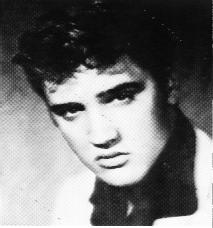
Billie Mae Smith in 1955, when she dated Elvis - and the photo he gave her. 

When Col. Tom Parker announced in the spring of 1976 that Elvis was coming to play three consecutive nights at Johnson City's Freedom Hall, I was editor of the Kingsport Times News' Saturday magazine, Weekender. When a big act came to town coverage usually fell to me. I had written a full page story about Alice Cooper, another full page story about Bruce Springsteen, even a full page story about Chubby Checker. 
Elvis wasn't doing interviews - he hadn't done an interview in years - so I needed an angle. The angle fell in my lap when my colleague Lyndia Frazier asked if I knew about Elvis' previous show in town, at the Civic Auditorium. I'd never heard of it. Elvis in Kingsport? She didn't remember the date or even the year but she was sure Elvis had played the Civic Auditorium. 
I started digging around, a detail here, a name there. Eventually I talked to almost everybody involved in the story, from WKIN station manager Dia Bahakel, who had promoted the show, to Billie Mae Smith, who had gone on a date with Elvis after the performance, to Wayne "Booge" Allen, her boyfriend, who was not happy about his girlfriend going out with Elvis. 
Over the years since 1976 I have talked to some30 people who were at the show, filling in details on Elvis' one night in Kingsport. 
To celebrate Elvis' 85th birthday, here is the story of that night 65 years ago. 

Wayne "Booge" Allen in 1955


Wayne “Booge” Allen never saw it coming.
He knew his girlfriend Billie Mae Smith and her friends were going to a show at the Civic Auditorium.
He had no problem with that. After all he was planning to spend the evening hanging out with his buddies.
He and his pals were in his green and white Chevy Bel Air, heading downtown to cruise Broad. They were stopped at the light at the corner of Center and Wilcox when Booge looked over at the pink Cadillac convertible to his left. And what did he see but his girlfriend, Billie Mae Smith, sitting next to some greasy haired dude.
Booge would recall, “She leaned over and rolled down the window and told me to come down to her house later, there was someone she wanted me to meet.” Allen remembered thinking he didn’t want to meet the guy with her.
The guy with her was Elvis.
It was Sept 22, 1955 and Elvis was in town for his first, last and only Kingsport date. He was traveling with a couple of country acts, Cowboy Copas and the Louvin Brothers, and Elvis was the middle act on the bill. This was a couple of months before he signed with RCA and four months before his breakout hit “Heartbreak Hotel.”
Billie Mae didn’t have any idea who Elvis was before the show. “I was 20 years old then and I managed Huddle’s Record Shop. Back then they let you play the records before you bought them. A salesman came in with records that Elvis had recorded. I had never heard of Elvis but after hearing the recording I ordered some to sell. The salesman said, ‘Here are some tickets to an Elvis show that will be at your Civic Auditorium in September.’”
The Kingsport show was promoted by WKIN-AM deejay Chuck Foster and WKIN station manager Dia Bahakel. They had rented the Civic Auditorium and advertised the show on their station. 
Admission was $1.25 and in 1976 Bahakel told the Kingsport Times that a grand total of 270 people were in attendance.
Elvis opened his set with a joke - “Where is Kingsport, Tennessee anyway?”-  before launching into his first song, “Rock Around the Clock.” He played for half an hour, closing with the ballad “I Love You Because.”
That’s when the real story begins. During intermission Elvis and his band, the Blue Moon Boys, set up in the hall outside the stage door and signed autographs and sold photos for fifty cents. Darla Hodge recalled in ’76 that he pointed to her and said, “Hey Liz, hey Liz Taylor, come up here.” She did and he gave her a photo autographed “I love you, Liz - Elvis.”
After signing a few autographs, he led a group of admiring girls outside to show off his pink Cadillac.
Billie Mae Smith and her two girlfriends came up. When one was too shy to ask Elvis for any autograph, Billie Mae spoke up.
“I went up and I said, ‘When you get through showing off your car, my friend would like your autograph.’ He said, ‘What’s the matter? Don’t you want it?’”
Billie Mae said she replied, “’Not particularly.’ I was playing hard to get.”
He asked her name, she told him and he invited her to come back stage after the show was over.
“I told him I might.”
After the show, the three musical acts gathered round while Bahakel counted the money. After taking her cut, she divvied up the proceeds. She paid Elvis and his band $37 and change for their show.
Enter Billie Mae Smith, no longer as standoffish. She joined Elvis in his Caddy. He was hungry so she steered him to the local hangout, Jimmy’s Steak House at 3101 Memorial Boulevard at the Upper Circle where they had club sandwiches.
But first Billie Mae told Elvis she wanted to cruise Broad.
Billie Mae said, “I remember I kept looking at his hair because he had a permanent in it so that when he shook his head a curl would fall in his eyes.”
Billie Mae and Elvis were stopped at the red light at Center and Wilcox when Booge pulled up. And Billie Mae told Booge to come over later.
Once back at her house, she invited Elvis in for a cup of coffee. They were sitting at the kitchen table, talking and sipping coffee, when she heard a commotion outside. Booge had reappeared.
One of Elvis’ bandmates met Booge and told him, “You’re not wanted here.”
Wayne didn’t take this too well. “I said, ‘The hell with you; two can play this game.’” He raced down to the Texas Steer Drive-In - it was on Center just before you got to Kingsport Press - picked up two of his friends, and returned to Billie Mae’s.
“I told the guy outside that if he wanted trouble there was more than one of us now.”
Elvis and Billie Mae heard the noise and came out. Billie Mae introduced Booge and Elvis. But they didn’t shake hands.
Allen remembered, “Elvis said, ‘I’m breaking this guy’s heart. Maybe I’d better leave.’”
Billie Mae took Booge aside, told him everything would be all right and sent him home.
Elvis didn’t stay much longer. It was the last night of the tour and he was anxious to be back to Memphis. Just one thing before he left,
“When we went outside to leave, he reached out and pulled me up close to him and kissed me. My knees went weak. He had the softest lips I have ever kissed.”
It was a goodnight kiss for all time. “It was very thrilling.”
Booge came back later and circled the block but Elvis had gone.


Monday, August 14, 2006

It was 29 years ago...


...that Elvis died. Folks still mark the day, August 16.
I'm marking it with this reprint of my column about the time Elvis performed at the Civic Auditorium in 1955, before he was a star.

This column originally ran March 20, 2004.

Here it is along with the photo that Elvis gave to Kingsport girl Billie Mae Smith.

Elvis left vivid memories in Kingsport - before he was the King

It was Sept 22, 1955, when Elvis arrived in town for his first, last and only Kingsport date. He was traveling with a couple of country acts, Cowboy Copas and the Louvin Brothers, and Elvis was the middle act on the bill. This was a couple of months before he signed with RCA and four months before his breakout hit "Heartbreak Hotel."

The Kingsport show was promoted by WKIN-AM deejay Chuck Foster and WKIN station manager Dia Bahakel. They rented the Civic Auditorium and advertised the show on their station.

Admission was a dollar and a quarter and in 1976 Bahakel recalled to me that a grand total of 270 people were in attendance.

People I talked to remembered Elvis as wearing white buck shoes, electric pink socks, denim pants, a pink shirt and a black leather jacket.

He opened his set with a joke - "Where is Kingsport, Tennessee anyway?" - before launching into his first song, "Rock Around the Clock." He played for about half an hour, closing with the ballad "I Love You Because."

That's when the real story begins. During intermission Elvis and his band, the Blue Moon Boys, set up in the hall outside the stage door and signed autographs and sold photos for fifty cents. Darla Hodge told me he pointed to her and said, "Hey Liz, hey Liz Taylor, come up here." She did and he gave her a photo autographed "I love you, Liz - Elvis."

After signing a few autographs - how many would he have to sign when the total crowd was less than 300? - he led a group of admiring girls outside to show off his pink Cadillac.

And that's when our story gets good. Billie Mae Smith and two friends came up. When one of the girls was too shy to ask Elvis for an autograph, Billie Mae spoke up.

"I went up and I said ‘When you get through showing off your car, my friend would like your autograph.' He said, ‘What's the matter? Don't you want it?'"

Billie Mae said she replied, "‘Not particularly.' I was playing hard to get."

He asked her name, she told him and he invited her to come back stage after the show was over.

"I told him I might."

After the show, the three musical acts gathered round while Bahakel counted the money. After taking her cut, she divvied up the proceeds.

She told me Elvis and his band made $37 and change for their show.

Enter Billie Mae Smith, no longer as standoffish. She joined Elvis in his Caddy. He was hungry so she steered him to a local hangout, Jimmy's Restaurant, which was on Memorial Boulevard, about where the Bethel Presbyterian Church parking lot is now.

But first she wanted to cruise Broad. Billie Mae and Elvis were stopped at the red light at Center and Wilcox when a green and white Chevy Bel Air pulled up in the lane next to them.

Wayne "Booge" Allen glanced over and who should he see but his girlfriend, Billie Mae Smith, sitting next to some greasy haired dude.

(Booge is pronounced BOOJ.)

Allen told me, "She leaned over and rolled down the window and told me to come down to her house later, there was someone she wanted me to meet." Allen remembered thinking he didn't want to meet the guy with her.

Meanwhile Billie Mae and Elvis had club sandwiches at Jimmy's then went to her house.

Billie Mae said, "I remember I kept looking at his hair because he had a permanent in it so that when he shook his head a curl would fall in his eyes."

Once back at her house on Catawba, she invited Elvis in for a cup of coffee. They were sitting at the kitchen table, talking and sipping coffee, when she heard a commotion outside. Booge Allen had reappeared.

One of Elvis' bodyguards met Booge and told him, "You're not wanted here."

Wayne didn't take this too well. "I said, ‘The hell with you; two can play this game.'" He raced down to the Texas Steer Drive-In - it was on Center just before you got to Kingsport Press - picked up two of his friends, and returned to Catawba.

"I told the guy outside that if he wanted trouble there was more than one of us now."

Elvis and Billie Mae heard the noise and came out. Billie Mae introduce Booge and Elvis. But they didn't shake hands.

Allen remembered, "Elvis said, ‘I'm breaking this guy's heart. Maybe I'd better leave.'"

Billie Mae took Booge aside, told him everything would be all right and sent him home.

Elvis didn't stay much longer. It was the last night of the tour and he was anxious to be back to Memphis. Just one thing before he left: a goodnight kiss for all time. "He sure could kiss," cooed Billie Mae. "It was very thrilling."

Booge came back later and circled the block but Elvis had gone.

Elvis was back in Tri-Cities two decades later. He played four shows at Freedom Hall in 1976, staying at a hotel in Bristol. As far as anyone knows, he never set foot in Kingsport again after that one night in 1955. But no one who was there has ever forgotten it.

Billie Mae Smith Barker now splits her time between a home in Ormond Beach, Fla., and her parents' old house on Catawba. Wayne Allen is in St. Petersburg, Fla., where he has lived for the last 26 years. They went separate paths after Elvis, but Wayne says, "We still talk to each other every year on our birthdays. And she's still as pretty as she was in high school."

Tuesday, August 14, 2007

All Elvis, All the Time

This is the photo Elvis gave to Billie Mae Smith in 1955.

This column was published March 20, 2004

Elvis was all over the news this past week, despite the fact that he has been dead for almost 27 years.

The big story was the break-in at the Elvis-A-Rama Museum in Las Vegas in which thieves made off with a quarter-million dollars worth of Elvis memorabilia, mostly jewelry, but passed on the blue suede shoes in the window, valued at a million dollars, thereby giving headline writers a field day: "Elvis' Jewelry Has Left the Building," "Not Step On His Blue Suede Shoes."

A quarter-century after his death the king is still making news ... and money.

Elvis consistently ranks at the top of Forbes magazine's annual Top Earning Dead Celebrities list. Last year he grossed $37 million, almost $10 million more than number two, dead cartoonist Charles Schulz.

The Elvis news this week brought requests from two readers for the story of Elvis' only Kingsport concert.

Yes, I do requests.

And yes, Elvis did perform in Kingsport almost fifty years ago.

I interviewed a couple of dozen local people about that show back in the mid-'70s, when their memories were still relatively fresh. And this is the story they told me.

It was Sept 22, 1955, when Elvis arrived in town for his first, last and only Kingsport date. He was traveling with a couple of country acts, Cowboy Copas and the Louvin Brothers, and Elvis was the middle act on the bill. This was a couple of months before he signed with RCA and four months before his breakout hit "Heartbreak Hotel."

The Kingsport show was promoted by WKIN-AM deejay Chuck Foster and WKIN station manager Dia Bahakel. They rented the Civic Auditorium and advertised the show on their station.

Admission was a dollar and in 1976 Bahakel recalled to me that a grand total of 270 people were in attendance.

People I talked to remembered Elvis as wearing white buck shoes, electric pink socks, denim pants, a pink shirt and a black leather jacket.

He opened his set with a joke - "Where is Kingsport, Tennessee anyway?" - before launching into his first song, "Rock Around the Clock." He played for about half an hour, closing with the ballad "I Love You Because."

That's when the real story begins. During intermission Elvis and his band, the Blue Moon Boys, set up in the hall outside the stage door and signed autographs and sold photos for fifty cents. Darla Hodge told me he pointed to her and said, "Hey Liz, hey Liz Taylor, come up here." She did and he gave her a photo autographed "I love you, Liz - Elvis."

After signing a few autographs - how many would he have to sign when the total crowd was less than 300? - he led a group of admiring girls outside to show off his pink Cadillac.

And that's when our story gets good. Billie Mae Smith and two friends came up. When one of the girls was too shy to ask Elvis for an autograph, Billie Mae spoke up.

"I went up and I said ‘When you get through showing off your car, my friend would like your autograph.' He said, ‘What's the matter? Don't you want it?'"

Billie Mae said she replied, "‘Not particularly.' I was playing hard to get."

He asked her name, she told him and he invited her to come back stage after the show was over.

"I told him I might."

After the show, the three musical acts gathered round while Bahakel counted the money. After taking her cut, she divvied up the proceeds.

She told me Elvis and his band made $37 and change for their show.

Enter Billie Mae Smith, no longer as standoffish. She joined Elvis in his Caddy. He was hungry so she steered him to a local hangout, Jimmy's Restaurant, which was on Memorial Boulevard, about where the Bethel Presbyterian Church parking lot is now.

But first she wanted to cruise Broad. Billie Mae and Elvis were stopped at the red light at Center and Wilcox when a green and white Chevy Bel Air pulled up in the lane next to them.

Wayne "Booge" Allen glanced over and who should he see but his girlfriend, Billie Mae Smith, sitting next to some greasy haired dude.

(Booge is pronounced BOOJ.)

Allen told me, "She leaned over and rolled down the window and told me to come down to her house later, there was someone she wanted me to meet." Allen remembered thinking he didn't want to meet the guy with her.

Meanwhile Billie Mae and Elvis had pepperoni pizza at Jimmy's then went to her house.

Billie Mae said, "I remember I kept looking at his hair because he had a permanent in it so that when he shook his head a curl would fall in his eyes."

Once back at her house on Catawba, she invited Elvis in for a cup of coffee. They were sitting at the kitchen table, talking and sipping coffee, when she heard a commotion outside. Booge Allen had reappeared.

One of Elvis' bodyguards met Booge and told him, "You're not wanted here."

Wayne didn't take this too well. "I said, ‘The hell with you; two can play this game.'" He raced down to the Texas Steer Drive-In - it was on Center just before you got to Kingsport Press - picked up two of his friends, and returned to Catawba.

"I told the guy outside that if he wanted trouble there was more than one of us now."

Elvis and Billie Mae heard the noise and came out. Billie Mae introduce Booge and Elvis. But they didn't shake hands.

Allen remembered, "Elvis said, ‘I'm breaking this guy's heart. Maybe I'd better leave.'"

Billie Mae took Booge aside, told him everything would be all right and sent him home.

Elvis didn't stay much longer. It was the last night of the tour and he was anxious to be back to Memphis. Just one thing before he left: a goodnight kiss for all time. "He sure could kiss," cooed Billie Mae. "It was very thrilling."

Booge came back later and circled the block but Elvis had gone.

Elvis was back in Tri-Cities two decades later. He played four shows at Freedom Hall in 1976, staying at a hotel in Bristol. As far as anyone knows, he never set foot in Kingsport again after that one night in 1955. But no one who was there has ever forgotten it.

Billie Mae Smith Barker now splits her time between a home in Ormond Beach, Fla., and her parents' old house on Catawba. Wayne Allen is in St. Petersburg, Fla., where he has lived for the last 26 years. They went separate paths after Elvis, but Wayne says, "We still talk to each other every year on our birthdays. And she's still as pretty as she was in high school."


This column was published on January 7, 2006.

Sunday is Elvis' birthday. Technically it's his 71st birthday, but for those of us who remember the cool young dude with the ducktail haircut and the out-of-control pelvis, it's the 50th anniversary of his 21st birthday.

It's that 21-year-old Elvis I want to talk about.

You can debate whether he was the biggest phenomenon this country has ever seen. But he was certainly Top 10.

The year he turned 21 - 1956 - was also the year he arrived on the national stage. And boy did he arrive!

In 1956 he had five number one records.

"Heartbreak Hotel" was number one for eight weeks that year. "I Want You, I Need You, I Love You" was number one for one week. "Don't Be Cruel," which was backed by "Hound Dog," was number one for 11 weeks. And "Love Me Tender" was number one for five weeks. Fifty-two weeks, and Elvis had the number one Billboard hit during 25 of them.

And that doesn't include the 10 other Elvis records that made Billboard's Hot 100 chart that year!

"I Was The One" peaked at 19; "Blue Suede Shoes" topped at number 20; "Money, Honey" reached 76; "My Baby Left Me" made it to 31; "Blue Moon" reached 55; "I Don't Care If The Sun Don't Shine" peaked at 74; "Anyway You Want Me" cruised to 20; and "When My Blue Moon Turns To Gold" topped out at 19.

The last week of 1956, he had three more records reach the top 100: "Poor Boy" at 24, "Old Shep" at 47, and "Paralyzed" at 59.

And if that weren't enough, he also had the top-rated television appearance of all time, at that time, his Sept. 9 performance on "The Ed Sullivan Show." An astounding 83 percent of people watching TV that night tuned in to watch Elvis. The Super Bowl typically attracts 65 percent of the audience.

Elvis in 1956 was huge.

So you can understand why a group of teenage boys in Tennessee at that time would want to catch a glimpse of Elvis, maybe even shake his hand.

One of those boys was Emerson Poe, who had been a basketball star at the old Sullivan High School. At the time, Emerson was playing basketball at Hiwassee College in Madisonville, about an hour southwest of Knoxville.

Emerson says he and his teammates heard on the radio one Saturday that Elvis was heading from Atlanta to Knoxville.

"We knew he would have to go through Madisonville - it was on the main road - so all the basketball players got their cars and got ready to block the street so they could see him."

They parked out on College Street with their car radios cranked up and began their watch. They sat on the car hoods, nodding along to Elvis tunes, listening for updates on his travel.

First they heard he was in Cartersville. Then Chatsworth.

The excitement was building when the deejay announced Elvis had crossed the state line and now was in Tennessee.

The basketball players kept listening to the music and listening for the updates.

Soon he was in Cleveland. That was only an hour away.

Englewood! Elvis was in Englewood! Ten minutes from Madisonville.

The basketball boys began getting ready, cranking up their cars. And waiting.

Ten minutes passed. No sign of Elvis.

Then another 10 minutes. And another 10.

Suddenly the deejay announced Elvis was in Maryville.

The basketball boys were bewildered now.

What happened? How did Elvis pass through Madisonville without them seeing him?

They kept listening to the deejay, and they finally figured it out.

Elvis was traveling by train.

ELVIS SIGHTING

The last time Elvis wasn't the headliner on a show was when he performed at the Civic Auditorium here on Sept. 22, 1955. He was the middle act. The Louvin Brothers opened the show, and Cowboy Copas was the main attraction.

The show was promoted by WKIN-AM, its owner Dia Bahakel and deejay Chuck Foster. Dia told me in 1976 that 270 people paid $1 each to attend the show. She said she paid Elvis and his band $37 and change for their performance.

Elvis had been performing all over the area in the week before the Kingsport show.

According to the book "Elvis: Day by Day" he played the American Legion Auditorium in Roanoke on Thursday, Sept. 15; the City Auditorium in Asheville Friday the 16th; the high school auditorium in Thomasville, N.C., on Saturday the 17th; the WRVA Theater in Richmond on Sunday and Monday the 18th and 19th; the Danville Fairgrounds Tuesday the 20th; and Memorial Auditorium in Raleigh the night before his Kingsport show.

He took local girl Billie Mae Smith to Jimmie's Steakhouse on Memorial Boulevard for pizza after the show before heading back to Memphis.

Then this correction came a week later.

In Sunday's column about Elvis' 71st birthday, I included a couple of paragraphs about Elvis' legendary performance at the Civic Auditorium in 1955 before he was a superstar. I noted that after the show, he and local girl Billie Mae Smith went to Jimmie's on Memorial Boulevard for pizza. I got that detail from a 1976 story I wrote about that event.

Barbara Ketron, who was in the group that went to Jimmie's with Elvis, sent word through Lou Richards that the group didn't eat pizza, they had club sandwiches.

This column was published on August 15, 2006

We were talking during breakfast at the Jan-Mar Saturday about some of the great groups that have played the Down Home in Johnson City. Art Williams recalled seeing John Lee Hooker, Willie Nelson, Doc Watson. Someone else mentioned Leon Redbone.

I asked jokingly if anyone had seen Elvis when he played there.

Of course Elvis never played the Down Home. Elvis died not long after it opened. In fact, Elvis died 29 years ago today.

And while he didn't play the Down Home, he did play the Civic Auditorium.

That was on Sept. 22, 1955, before he was a star. He was the middle act in a "country show," playing after the Louvin Brothers and before tour headliner Cowboy Copas.

You wouldn't have known he was the middle act from the ad in the Times-News that week. It had the name Elvis Presley at the top of the ad. Headliner Cowboy Copas had his name in small print down near the bottom.

I wrote about Elvis' Kingsport appearance in this column two years ago, and I've posted that column, along with the 1955 Times-News ad and the publicity photo that Elvis gave local girl Billie Mae Smith, on my blog: vincestaten.blogspot.com.

But even before that show Elvis had Kingsport connections.

Retired Kingsport attorney Jim Bowles was living in Memphis when Elvis was growing up. "I graduated from high school one year behind him. I used to see him occasionally around town before he got wild and popular."

Jim's younger brother, Ken, remembered Jim and Elvis drag racing on one of Memphis' streets, but Jim says his little brother has a vivid imagination. "Elvis had a pink Cadillac, and I had a '51 Olds. It was a pretty hot little car for that time, but I never dragged him. I did chase Elvis down the boulevard one time."

(Jim thinks it was Park Avenue, which runs at an angle from Poplar around the University of Memphis and Elvis' favorite playground, Libertyland.)

H.M. Rogers, who founded the Rogers Agency in Kingsport in 1957 (it's now combined with The Archer Agency), has a couple of Elvis stories.

H.M. was the district sales manager for Kemper Insurance in 1955. "I was based in Jackson, Mississippi, and I covered the whole state of Mississippi and Memphis. I traveled the district, and it took seven weeks to make the full tour."

It was then that H.M.'s life intersected with that of Elvis. "What had happened, Mr. McElroy of The McElroy Agency in Memphis was one of our agents. He was my first call that day. He said, ‘Harold, I've got a problem. I need you to sit down and let's talk.'"

H.M. took a chair and began to listen. "He said, ‘I've got this man. He's got five Cadillacs and a Lincoln and a couple of motorcycles. He's a lawful boy from a lawful family. Kemper wants to cancel him.'"

H.M. notes that six cars and two motorcycles was a big account at the time.

"He said he was a fine person with a good record. He kept talking about him for 30 minutes. Finally I said ‘Who is this man?' He said it was Elvis Presley and asked if I'd ever heard of him. I said I know he got caught last night going through Hattiesburg at 95 mph on the bypass. He said, ‘You knew that and you just let me keep talking?' I said ‘I just wanted to see how much rope it would take to hang you.'"

The upshot? "They canceled him. Kemper had a standard policy: They did not want entertainers."

H.M. has another Elvis story from his Mississippi days. "In '55 Elvis went down to Gulfport and offered his services for $5,000, he and his band, for a celebration. They turned him down. The next year they came to Elvis and wanted him to come down and offered him $50,000. He wouldn't go."

Friday, October 09, 2009

My Favorite Blog Posts

Four years and 256 blog posts later, here are six you may have missed:

(Some pop up by themselves, others pop up below this post. I don't know why.)


1933 Kingsport Phone Directory, all of it.

Map of the original Fort Henry Mall, from 1976.

Letter from Mayberry, in which Andy Griffith explains how town got its geographical location.

Broad Street Directory, 1947, 1965 and 1975.

Freedom Hall's Golden Age: the Seventies.

Haney's Place Chili recipe.

Thursday, April 17, 2014

Alice Cooper at Johnson City's Freedom Hall 1975

Saturday, August 29, 2026

What If Dolly Gave a Show in Kingsport and Nobody Came


The Night Only 200 People Showed Up to a Dolly Parton Concert

In the days immediately after her death, Dolly Parton was the subject of at least 19 separate stories in The New York Times. That’s the kind of coverage normally reserved for world leaders, which, in a way, Dolly was. Except she was more beloved.

Dolly Parton had been a performer since she was in grade school and a star since she was 21. In fact one of her last appearances, just as she was on the precipice of stardom, came at Kingsport’s Civic Auditorium, on Sept. 26, 1967, as co-headliner with Red Foley.

In a venue with an official seating capacity of 2,032, Dolly and Red drew only 200 people. And ticket prices were a reasonable $1.50 and $2, significantly less than the Porter Wagoner Show, staged a couple of months earlier in the same venue, that drew 1,800. (Tickets for that show were $2.50, $3 and $3.50.)

Even the Kingsport Times-News noticed the attendance discrepancy, calling the Dolly and Red show a “financial deficit.”

What happened?

How did it happen that Dolly gave a show and nobody came?


It had been a cool, rainy summer in Kingsport in 1967. All the excitement in town was directed to a piece of ground behind J. Fred Johnson Stadium, where the new Dobyns-Bennett High School building was going up.

But a lot had been going on at the other end of the stadium parking lot: the Civic Auditorium had been the scene of a series of concert by stars of the Grand Ole Opry, kicking off in May with a standing room only show by Porter Wagoner, followed quickly by well-attended concerts by Conway Twitty, Bill Anderson, Bobby Bare, Ernest Tubb, Tammy Wynette and Kitty Wells, easily outdrawing every other form of local entertainment, from symphony concerts to Audubon film travelogs to Theatre Guild productions. All this drew the attention of the Kingsport Times-News which assigned Arts Writer Margy Clark to investigate. In a lengthy Sunday story, she concluded, “Country and western entertainers, when presented at not too frequent intervals and made available at a realistic price, are still the most successful crowd pleasers in town.”

But there was one exception that stuck out to her: the Dolly and Red show.

Dolly had already played a successful show at the Civic Auditorium back in July. But she was the third billed – “Also” – behind headliner Merle Haggard and his frequent duet partner Bonnie Owens.

On September 26, 1967 she was the co-headliner with Red Foley in what was billed as “Kingsport’s First Country Western Gospel Variety Round-Up.”

Foley was a country and gospel legend but his peak years were in the forties and fifties.

And Dolly was only 21 years old with just two singles that had hit the music charts, “Dumb Blonde,” which had peaked at number 24 on the Billboard Hot Country Singles Chart, and “Something Fishy,” which had made it to number 17. She wasn’t yet a star.

There were things working against her September show.

All those summer country shows at the Civic Auditorium. School was back in session. High school football had started.

And the night before her show the new D-B Dome had opened with an exhibition basketball game between the NBA champion Philadelphia 76ers and the St. Louis Hawks that was attended by 4,000 fans.

And her show was on a Tuesday night.

But at least it wasn’t up against Wednesday night prayer meeting.

The sponsoring Colonial Heights Optimist Club had purchased five days of newspaper ads to promote the show.

Still only 200 people showed up.

That didn’t deter Dolly’s perpetually sunny outlook. She knew better days were ahead. Earlier that month she’d signed to replace Norma Jean as Porter Wagoner’s duet partner on his television show. She cut her first record with him two weeks later. And she was back in Kingsport two months later opening the show at the Civic Auditorium for Porter and the Wagon Masters. She was now an official member of Porter Wagoner’s traveling show.

She was going to be a star.

That was what she wanted to be. When I interviewed her eight years later, after a performance before a full house at the D-B Dome, she told me, “All I ever wanted to be was a star.”

She ended up being a superstar. 


You can read that 1975 story here:

https://vincestaten.blogspot.com/search?q=dolly


Budding superstars have a history of playing to sparse crowds in the Tri-Cities:

On September 22, 1955, 20-year-old Elvis Presley played in front of a crowd of 270 in that same Civic Auditorium. (He had not yet appeared on Ed Sullivan.)

And on April 20, 1976, 26-year-old Bruce Springsteen, who had just appeared simultaneously on the covers of Time and Newsweek, performed for only 898 fans in near-empty 8,000-seat Freedom Hall in Johnson City.


Who was Lavern Tripp. last billed on the Dolly-Foley show? Robert Lavern Tripp, who would replace Elmo Fagg in the well-known Southern gospel group The Blue Ridge Quartet the next year. 

Who were Bill Owens & the Kinfolks? Bill Owens was her kinfolk, as were the others in the group. Bill was her uncle, her mother's younger brother, and also her mentor and songwriting partner. The other band members were Louis Owens, Bill's brother and also Dolly's uncle; Dwight Puckett, Bill and Louis' nephew, and Dolly's first cousin; and Ralph Loveday, an Owens cousin. 


Monday, November 13, 2006

Doris Jean Robinson Cox - R.I.P.

Doris was a remarkable lady. She died over the weekend. Here is the column I wrote about her two and a half years ago.

Originally published on March 27, 2004
Doris Jean brought deaf culture to Kingsport's mainstream


When Doris Jean Robinson Cox graduated from Dobyns-Bennett in 1951, she was in a class of her own - the very first deaf student to graduate from the local high school.

Half a century later, she's still in a class of her own, a pioneer in bringing deaf culture to Kingsport's mainstream. Quietly, of course, but effectively.

Doris Jean was born in 1932 in an upstairs apartment at the corner of Main and Cherokee. That's correct. She was born there. "It wasn't until 1937 that they delivered babies at Holston Valley Hospital," she says. Her father, Amos Robinson, owned the garage downstairs. He used it for his business, Robinson Moving, a company he'd started in 1925 to move people who got jobs at Eastman.

Her father had met her mother when he was hired to move their family to Kingsport. Doris Jean says her mother was not taken with him. "My mother didn't really like my father at first. She had graduated from Radford and been teaching in Russell County, and she thought he was just a truck driver. She didn't know he owned the company."

Doris Jean's mother returned to Virginia to finish out the school year. "She was teaching and he went into her schoolroom and sat there and listened. He stayed and stayed and stayed. She said she married him to get rid of him."

They hadn't been married long when Doris Jean's mother discovered she was pregnant. A year after their wedding, Mr. and Mrs. Amos Robinson welcomed Doris Jean into the world.

Old Dr. Yancey came by the house to deliver her. Nine months later her mother was at the doctor's office, concerned that her baby girl might be deaf. Doris Jean says, "He told her, ‘Yeah, she's deaf.' They thought it might have been from a high fever I had when I was six months old." Doris Jean says her mother and father were heartbroken. But that didn't keep them from wanting the best for their daughter.

"My mother asked Dr. Yancey, ‘How can she get an education? She's a smart little girl.' Dr. Yancey drove to Nashville and talked to the Board of Education. That's when he found the Deaf School in Knoxville." At age four, Doris Jean packed her little suitcase and headed to Knoxville to begin her education.

She spent the next 10 years boarding at the Tennessee School for the Deaf, learning all the subjects other school kids learned, plus signing, the hand language of the hearing impaired.

She left TSD after the 10th grade. "My mother felt I was ready for the hearing world." After two summer school sessions, she finally entered D-B in the fall of 1949.

And as you might expect, it was an adjustment.

"Deaf school was like the Army. Discipline, discipline, discipline, walk in a straight line. At Kingsport High there was lots of freedom." And that included living at home instead of a dorm.

She calls her years at Dobyns-Bennett wonderful years. She went to classes with the other kids. She was treated like everyone else. Oh there was that dressing down from Miss Springer, the study hall teacher, who gave Doris Jean a good shaking for not paying attention, not knowing that the reason Doris Jean hadn't obeyed her command was because she hadn't heard her command.

The only thing Doris Jean missed from deaf school was basketball. She had been on the girls' team but discovered D-B didn't have any girls' sports. She says her old deaf school coach drove to Kingsport to convince her to come back where she could play basketball. But Doris Jean had moved into a new world.

And that's where she met Charles Cox. He was working for her father at his new business, Robinson Studebaker. He picked up Doris Jean and her brothers Harold and Johnny for an errand.

"My, he was very good looking."

That night at the supper table she asked her father, "Who in the world was that young man?"

She says her father responded, "‘ That's Charles Cox' and then he told me what a wonderful man he was. He was a fighter pilot in the war. He went to UT. He really built him up. The next two years I worked and worked and worked to catch him."

They married shortly after her high school graduation. Soon Doris Jean and Charles, who was not deaf, had two sons of their own. She raised her sons but she didn't neglect herself. In 1977, she graduated summa cum laude from ETSU with a degree in art. "And she didn't even have an interpreter," says her grandson Chad Cox, who served as interpreter for this interview. "She read lips and copied notes."

She didn't stop there. She finished graduate school in 1983 and then flew to Bolivia where she spent five weeks studying Bolivian weaving with Indian tribes. She visited Indian villages, studied their art, slept outside and ate Indian cooking.

Her art has stayed with her. Her Colonial Heights home is decorated with her handiwork, from an old Robinson Studebaker Co. bookcase that she refinished to an entryway wallpaper based on her own design.

Charles Cox passed away eight years ago shortly after their 45th wedding anniversary. She says it was hard for the first three years, but she has adapted. Just as she has adapted to everything thrown her way in life. Grandson Chad, who stays with her, says, "She was the key to opening deaf culture in Kingsport." It was Chad, not Doris Jean, who told me how she was responsible for bringing closed captioning to Kingsport television, how she served as the role model for the deaf students at Dobyns-Bennett after her, how she led the way as the first deaf student at ETSU.

Doris Jean Robinson Cox proved that being deaf in a hearing world is a challenge not a handicap.